Showing posts with label grade. Show all posts

Tips for Buying Diamonds Online

With all of the potential for scams concerning diamonds, buying diamonds online almost seems unthinkable! However, you actually can purchase diamonds online, without any problems – as long as you are careful.

Why Buy Online
First, think about your reasons for wanting to purchase the diamond online, as opposed to making a purchase from a local jewellery store. The most common reason is price. Due to low overhead costs, online jewellers and wholesalers are able to offer lower prices. However, you must be careful – sometimes a price that is too low is a sure indication of a scam.

One of the best things about purchasing online is the unlimited selection. When shopping offline, you are limited to the selection in the stores in your general area. Online, there are no limits. But again, you must use a great deal of care and consideration before handing your money over to someone that you cannot see and have never met!

Research First
Before shopping, learn as much as you can about diamonds – especially cut, color, clarity and carat weights. When you are knowledgeable about diamonds, it will be harder for a con artist to rip you off. Once you know more about diamonds, you will be ready to start shopping.

Take your time. Don’t purchase the first diamond that you see that interests you. Instead, look for similar diamonds for sale. Do some comparison shopping to find the lowest prices. Once you have found the lowest price, start doing your investigation. You know about diamonds, you’ve found a diamond that you love, and you’ve found the lowest price – but you are still quite a ways away from actually purchasing that diamond!

Ask about the seller’s credentials, such as professional jewellery associations that they belong to. View and print the seller’s return, refund, and upgrade policies. Also inquire about additional services, such as settings and mountings, sizing, and free shipping. Do a search for customer reviews on this particular company around the Internet. Also check online to see if there have been any complaints. Ask for a diamond grading report from an independent laboratory such as GIA, HRD, EGL or AGS. You should see this before making a purchase.

Escrow Services
Finally, use a reputable escrow service for high dollar diamonds – preferably one that will have the diamond appraised while it is in their possession. The seller sends the diamond to the escrow service, and you send the money to pay for the diamond to the escrow service. The escrow service has the diamond appraised, sends the diamond to you, and sends the money to the seller. This is the surest way to protect yourself…again, make sure that you use a reputable escrow service!

About Diamond Grading Reports And Certificates

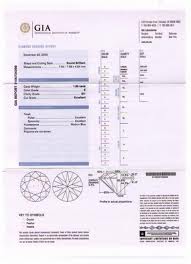
A diamond certificate is also known as a Diamond Grading Report. This report comes from the Gemological Institute of America (GIA), and you should require this report when you are purchasing a diamond.


 With a diamond certificate, you can verify the color, cut, carat weight, and clarity of the diamond. You don’t have to worry about a diamond dealer telling you anything less than the truth, because the certificate comes from the GIA – not the dealer. You may be required to pay for the certificate, but the cost is usually low, and in many cases, it will help you negotiate a better price on the diamond – or keep you from purchasing a lower quality diamond altogether.

If you buy a high quality diamond, and then later decide to sell the diamond, you will need to have the certificate, or you will have a hard time selling it to someone else. Furthermore, you can use the Diamond Grading Report to look up the wholesale value of the diamond in question. Use the guide that is used by the diamond cutting industry.

With the Certificate, or Diamond Grading Report, there won’t be any doubts when you are trying to purchase a diamond. You can easily find out what the diamond is worth. This will prevent you from overpaying, and it can prevent a seller from under-charging as well.

A copy of the Diamond Grading Report should be given to your insurance company as well, when you insure the diamond. This provides absolute, unquestionable proof of the value of the diamond should it be stolen in the future. Insurance companies cannot argue with the report.

Avoid diamond dealers who seem reluctant to provide a certificate! Also avoid sellers who tell you that a certificate diamond will cost you more – the only additional cost should be the cost of the certificate, which is low. If the dealer doesn’t want to provide a certificate, then you don’t want to do business with that dealer.

Don’t accept certificates from gemological laboratories other than GIA. There are many fly-by-night gemological labs these days, but in the end, GIA has been established as the most respectable and trustworthy – not to mention oldest – of the lot. So avoid dealers who don’t want to use GIA for certification purposes as well.

Don’t buy an expensive diamond without paying the extra cost of the certificate. If a dealer tries to convince you to make the purchase without the certificate, or if they want to use a company other than GIA, you can be sure that the dealer has probably greatly inflated the price of the diamond – they have something that they are hiding from you.

Five Diamond Scams To Look Out For

When it comes to diamonds, there are numerous scams to avoid. Most scams are minor, but there are some major ones that come up from time to time concerning the buying and selling of diamonds. Scams occur simply because most people who buy diamonds – for whatever reasons – don’t know that much about diamonds. Therefore, they are easily fooled.

Carat Total Weight
A common scam that most jewellery stores participate in is the Carat Total Weight scam. The tag on the piece of jewellery, usually a ring, only states the total carat weight of all diamonds in the piece, instead of listing the weights separately for each diamond. This leads consumers to believe that the main diamond in the piece is actually bigger than it is. Ask what the carat weight of the main stone is.

Fractions
Also beware of fractions. Jewellery stores are allowed to round off diamond weights. This means that if the jeweller tells you that it is a ¾ carat diamond, it is probably between ½ and ¾ carat – but closer to ¾.

'Special' Diamonds & Lighting
Jewellery stores often run ‘fluorescence’ scams to varying degrees. Referring to a diamond as a blue-white diamond is such a scam. A blue-white diamond sounds very unique and special, but in fact, this type of diamond is of lesser quality – even though the jeweller will try to make you think you are getting something special. Jewellery stores also like to show their diamonds in bright lights. Lights make diamonds shine. Ask to see the diamond in a different, darker type of lighting as well.

Appraisals
Some truly unscrupulous jewellers target those who want appraisals on diamonds that were given to them as gifts or that were purchased elsewhere. They will try to tell you that the diamond is worthless, or worth less than it actually is worth – and offer to take it off your hands or trade it for a much better diamond, along with the cash to make up the difference. This is called low balling. Get a second, third, and even a forth opinion before taking any action.

Switch Diamonds
Another common dirty trick is to switch the diamond you have chosen and paid for with one of lesser quality and value when you leave it to be set in a piece of jewellery, or leave a diamond ring to be sized. The only way to avoid this is to do business with one trustworthy jeweller. Avoid jewellers that you have not done business with in the past.

There are many more scams that jewellery stores commonly pull on unsuspecting consumers. Just use your best judgment, and purchase your diamonds with the utmost care and consideration.

How Are Diamonds Cut?

In their most natural form, diamonds are, well, quite ugly. They have no luster or shine, and in fact, look like nothing more than broken glass. A diamond must be cut, and then polished before it actually becomes a thing of beauty.

Planning and Marking
A rough diamond is first examined by a planner to determined how it should be cut to yield the best value. The planner takes into consideration of the grain and crystal structure of the diamond to mark positions where it would be cleaved or sawed by the diamond cutters.

Cleaving
Large diamonds are separated into smaller pieces, by a process known as cleaving, that are suitable for further sawing. Cleaving is also done to quickly remove large unwanted pieces (usually areas with blemishes and other imperfections) from the rough diamond. This process is important as a wrong split will ruin the diamond and reduce the value of the diamond drastically.

The cleaver carefully cut grooves into the diamond at locations marked by the planner with another diamond. He then splits the diamond along the grooves with a mallet and a metal wedge. The diamond is now ready for sawing.

Sawing
Sawing shapes the diamond into various shapes such as heart, square, or the common round shapes. A circular disk saw is used to cut it down to shape. The cutting edge of the saw is initially coated with diamond dust in order to start the first few cuts. After the first few cuts, the cutting edge of the saw will coat itself with diamond dust from the diamond that is being cut. This maintains the hardness of the saw's cutting edge.

Girdling
The diamond is further shaped and its freshly cut edges are rounded by girdling. The diamond is mounted on a lathe and another diamond is used to grind it into shape.

Faceting
A diamond lapper or scaife that is coated with diamond dust is used to cut the facets. Faceting is the final and one of the most important steps in diamond cutting where the facets of a diamond is cut. The quality of the faceting that is being done will determine the brillance and fire of the diamond. Each facet of the diamond must be carefully cut into the geometrical shapes that allow maximum refraction and reflection of incident light.

Polishing
Polishing is the final step to transform a rough diamond into a diamond that is ready for sale. A diamond lapper is used, but with a different, finer lapping disk. The diamond is then finally ready for certification grading and sales or further setting into jewellery.

How To Determine Diamond Prices

Pricing most products is quite easy. Determine how much it costs to make the item, how much it costs to market that item, and then mark it up by 15 – 30% or more. Simple, right? Well, pricing diamonds isn’t quite that simple. There are many factors that are considered when diamonds are priced.

Diamond prices are determined first by adding the cost of the rough diamond, the cost of cutting the diamond, and all other costs necessary to turn the rough diamond into a marketable diamond. Depending on the importance of the diamond, an independent company may be called in to certify the grade of the diamond based on colour, cut, clarity, and weight.

Before reaching the retailer, the diamond must travel from the mine, to the cutter and polisher, to the independent grading company, and then to the primary market. Once it has reached the primary market, it will be purchased by diamond dealers and wholesalers, and from there it will be sold to retailers. The diamond becomes more expensive each time it changes hands, until it finally reaches a retailer, where the price is raised a bit more.

The value of a diamond is based on what the diamond will sell for in the market place through a retailer. As you can see, the earlier you can purchase a diamond in the process, the lower the cost of the diamond will be – but not the value.

If you own a diamond, and you have no idea how much it is worth, you can have it appraised, but the appraisal may not be accurate. You will be better off obtaining a certificate through GIA – Gemological Institute of America. With the information on this certificate, you can use a diamond price guide to accurately determine what your diamond is worth.

There are also many diamond price calculators available on the Internet, and many diamond dealers use these as well. You will realize that before you can accurately price a diamond, without a Diamond Grade Report, you need to know quite a bit about diamonds, such as different cuts, clarity, color, and weight – and how each of those aspects adds to the value of a diamond, or decreases the value of the diamond as the case may be.

Again, you will be better off if you get a Diamond Grading Report on the diamond, and use that information to look up the price in one of the guides that the diamond cutting industry uses. This will give you the most accurate value of the diamond in your possession, or of the diamond you are considering to purchase.

How To Sell Diamonds

There are many reasons why you may want to sell a diamond that you own. Perhaps you’ve gotten divorced, or you are strapped for cash. The reasons why don’t really matter – getting the best possible price is what counts! The way to obtain the best price for the diamond is to not be in a rush. Slow down, and carefully consider all of your options – there are many.

First, have the diamond appraised. In fact, have it appraised by two or three jewellers to get an accurate idea of the diamonds value. Tell the appraiser that you want the Rapaport Value. This is the wholesale value of the diamond, and it basically tells you the highest price that you can sell your diamond for. If your diamond has no certificate, you should consider getting a certificate from GIA. This may help you get a better price for the diamond as well.

First, try to sell the diamond yourself, to people you know. Friends and family members may be interested. If you don’t have any luck with friends or family members, you should turn to outside sources. Absolutely avoid pawn shops! A pawn shop will only offer you about 10% of what the diamond is worth! Also avoid offers of selling the ring on consignment. There are many things that can go wrong, and there is no shortage of diamond scams – even in well known jewellery stores.

If the diamond is important, you should strongly consider auctioning it off through one of the famous auction houses, such as Christie’s or Sotheby’s. If it isn’t what is considered an ‘important’ diamond or a high-end diamond, you should try to sell it to an individual using classified ads, or even eBay. However, selling to an individual that you do not know could put you in danger – especially if the diamond is worth a lot of money.

Your final option should be a jewellery store. It is vital that you not let your diamond out of your sight while in the jewellery store – you might find that the diamond you walked in with is not the same diamond that you walk out with! The jeweller will try to tell you that your diamond is of poor quality or low weight. Inevitably, there will be some problem with the diamond. This is where your appraisal and/or certificate will come in handy.

If the jeweller is fair, they will offer you between 60% and 80% of the value of the Rapaport Value. Do not accept anything less than this. Again, do not let the diamond out of your sight until you have been paid for it.

How To Spot Fake Diamonds

In this world of advanced technology it is almost impossible to simply look at a diamond and determine whether it is real or not – especially if you don’t know much about diamonds. There are some steps that you can take to avoid buying a fake diamond, however.

First, only deal with reputable jewellers, and when you find a reputable jeweller, stick with them. Avoid buying diamonds or other jewellery from jewellers that you have never dealt with before in the past. Ask to see the certificate for the stone. If no certificate exists, walk away.

Look at the setting that the stone is in. Fake diamonds, such as zirconias, are usually set in low quality metals. Take a close look at the stone. Fake diamonds are not durable – natural diamonds, on the other hand, are the most durable stone on the planet. Look for scratches or nicks.

After purchasing a diamond, take it to another jeweller for appraisal. In fact, take it to two or three other jewellers for an appraisal to make sure that the appraisals are all fairly close. If you find that you have purchased a fake diamond, you may be accused of making a switch when you return to the store of your purchase; therefore, it is important to have a certificate for the diamond. No two stones are alike.

Insurance for Your Diamonds

Insuring a diamond takes a bit of thought, planning, and shopping around. Diamond insurance isn’t like purchasing car insurance. It is quite different. Depending on the state that you live in, there are basically three different types of policies that will cover diamonds.

Actual Cash Value
The first type of insurance policies for diamonds is an Actual Cash Value policy. If the diamond is lost or damaged beyond repair, the insurance company will replace the diamond at today’s market value, no matter how much you paid for the diamond to begin with. This type of insurance policy for diamonds actually is not that common.

Replacement Value
The most common type of insurance for diamonds is Replacement Value insurance. The insurance company will only pay up to a fixed amount to replace the diamond that was lost or damaged beyond repair. This does not mean that they will pay that amount – it means that they will pay up to that amount. In most cases, the diamond can be replaced at a lower cost.

Agreed Value
The third type of coverage offered for diamonds is Agreed Value. This is sometimes called ‘Valued At.’ This type of coverage is very rare. In the event that the diamond is lost or damaged beyond repair, the insurance company simply pays you the amount that you and the company agreed upon. This is the best type of insurance to have, but it is rarely offered. If you can’t get Agreed Value coverage, Actual Cash Value coverage should be your next choice.

Diamond Value Certification
Your rates will be determined by the value of the diamond, the type of coverage that you select, and the area that you live in. If you live in an area with a high crime rate, you can expect to pay more for your diamond insurance coverage. It is important to remember that insurance agents are not qualified jewellers, and jewellers are not qualified insurance agents. It is best to get a certificate for your diamond, and to provide the insurance company with a copy of that certificate. This leaves the insurance company less room for arguments over the actual value of the diamond.

Don’t rely on separate coverage to cover your diamond. For instance, if you diamond is stolen from your home, it is probably covered on your home owner’s insurance policy – but the diamond probably won’t always be in your home, and once it leaves your home, there is no coverage.

Quick Guide to Selecting Diamonds

Diamonds are graded for certification by laboratories using grading criteria. Four of these criteria are critical to understand when making a diamond purchase or investment. Known as the “Four C’s”, these criteria are: color, cut, clarity and carat.

Colour
Color is the result of the composition of a diamond and it does not change. When a jeweler is describing the color of a diamond they are referring to the presence or absence of color in white diamonds. Because a diamond with no color allows maximum light to pass through, colorless diamonds are preferred for their sparkle.

Read more on Diamond Colour.

Cut
Cut refers to a diamonds reflective quality. Most diamonds are cut with 58 facets. The brilliance of diamonds is heavily dependent on the cut. The different angles and the finish of a diamond determine its ability to reflect light and cause its brilliance and fire.

Remember that the cut of a diamond can have an impact on its durability as well as its beauty. Some cutting faults can make a diamond prone to breakage. A diamond that is cut too thin can also cause light to leak out of the back and the diamond will lose some of the sparkle and appear not to shine. So, as you can see the cut is probably the most important of the Four C’s.

Read more on Diamond Cut.

Clarity
During the formation process, inner flaws, or inclusions occur in most diamonds. The number and size of these inclusions determine what is referred to as the clarity of a diamond. Diamonds that are clear create more brilliance and therefore are rarer and highly priced. To be considered “flawless”, a diamond must have no surface or internal imperfections visible upon being viewed by a skilled diamond grader using 10 power magnifications.

Read more on Diamond Clarity.

Carat
Carat is the unit of weight by which diamonds are measured. One carat is equal to 200 milligrams. A carat is divided into 100 segments called points.

Read more on the carat weight.

When you go to the store to make that all important diamond purchase, do not be shy! Ask questions, get the answers needed to make an informed purchase. Shopping for certified diamonds enables you to make an informed selection. Knowing the “four C’s” allows you to comparison shop and purchase the best diamond at a fair price. But, before making a purchase, shop around and decide what shapes and styles really appeal to you. Enjoy your diamond for years to come!

Synthetic Diamonds

The first synthetic diamonds were produced by General Electric in 1954. A synthetic diamond is basically a rock that has the durability, refractive index and hardness of a natural diamond – but it is made by man. A synthetic diamond should not be confused with stimulant diamonds, such as glass, cubic zirconia, or moissanite.

Although the technology for synthetic diamonds came into play in 1954, no synthetic diamonds were ever seen on the market until the 1990’s. This was due to the fact that it took many years for General Electric to produce a synthetic diamond that could compare with the quality of a natural diamond – and when they figured out how to do it, they found that it cost more to produce a synthetic diamond than it did to mine and cut natural diamonds.

Finally, a small company by the name of Gemesis Corporation figured out a way to produce synthetic diamonds that were of the same quality as natural diamonds, at a cheaper price. Today, Gemesis produces synthetic white diamonds, and colored diamonds as well. These diamonds sell for about 1/3 of the cost of a natural diamond, but there is a shortage of them, and they are hard to find. In fact, it seems that synthetic diamonds are rarer than natural diamonds!

4Cs - Diamond Cut

There are many different cuts of diamonds to choose from. The cut essentially refers to the shape and proportion that the diamond is cut into and this has a great impact on how the much the diamond sparkles.

Diamond Anatomy, Shapes and Cuts
The most popular cuts are heart, marquise, oval, pear, princess, round, trillion, and emerald cuts, with the round cut being the most common of all:
The shape has an impact on how much the diamond sparkles, but the actual cutting itself – when the diamond cutter actually cuts the diamond into a particular shape – also matters a great deal. If the diamond is poorly cut, it will have poor proportions and symmetry and will lose its sparkle, which is essentially based on the amount of light being reflected to the viewer's eyes. The proportion of a round diamond includes its gridle diameter and thickness, table width, crown height, pavilion depth, and culet.

Common cutting problems include a missing or off center culet, misalignment, a diamond that is too thick or too thin, cracks, or broken culets.

Choose Shape First, Followed By Cut
It is almost impossible to manually measure the proportions of diamonds in typical jewellery stores because they are either too small (in carat weight) or already set into jewellery pieces. Therefore when shopping, you should of course choose the shape that you like the best, and then look at several different diamonds of that shape to find the one with the best cut – the one that sparkles the most, in all types of lighting.

Diamond Colour

Most diamonds are in the shades of pale yellow to brown due to impurities and defects within the diamonds' crystal lattice. Hue and intensity are the main properties of diamond colour that will determine its value. These colors vary from red, green, purple, violet, orange, blue and pink – and most shades between. Fancy color shades vary from faint to intense. Natural blue and red diamonds are worth significantly more as they are very rare. Extremely pure white diamonds are also of very high value due to rarity.

White Diamonds
White diamonds are the most common type of diamond. These diamonds range from colourless to pale yellow and are graded on a D to Z scale from high to low value, D being colourless and Z being light yellow. The purer a diamond is, the whiter it appears to be under white light.

A 100% pure diamond is completely colourless, feels cold to the touch (of course, provided that it has not been under the spotlight in the display case for hours), and is simply captivating - almost like a kind of solitary emptiness that has manifested itself through Mother Nature's strive for perfection.

Treated and Synthetic Diamonds
Fancy colored diamonds are all the rage these days. Gemologists have developed new ways to create versions that are affordable for the average person - by treating less desirable diamonds. These less desirable diamonds are treated with irradiation followed by intense heat. This turns brown and yellowish diamonds into beautifully colored diamonds that you can afford. This treatment produces stunning greens, blues, yellows, reds, purples and other colors. The colors are considered permanent, but there is a possibility they could change during repairs if a high heat is used.

Treatments like irradiation make it possible for more people to own these vividly colored diamonds. Most natural colored diamonds are rare and also extremely expensive. When shopping for colored diamonds, you need to assume that any affordable fancy color diamond has been treated. Ask about the stone's origin and request to view a lab certificate to verify authenticity.

Synthetic colored diamonds are another option if owning a colored diamond is something you desire but cannot quite afford. They are real diamonds, but they are created in a lab.

Natural Coloured Diamonds
Natural fancy color diamonds get their coloring from different trace elements present in the stones, such as nitrogen, which produces a yellow diamond. Diamonds can be colored by exposure to radiation during its creation. An example of a diamond affected by radiation is a green diamond.

Another way that a natural colored diamond gets color is by its inclusions. Regarded as flaws and undesirable in a colorless diamond, inclusions give unique tones and brilliant flashes of color in a fancy color diamond. Remember that natural colored diamonds are very expensive, any colored diamond labeled to be sold as natural should be accompanied by a certificate from a respected grading lab.

Famous Diamonds
The most famous diamonds in the world are color diamonds. The Tiffany Diamond, which is yellow and the Hope Diamond which is blue are colored diamonds. Color diamonds have an amazing financial track record. The value has never decreased on wholesale level in more than 30 years. Blue and pink diamonds have doubled every 5 years of a strong economy. In the 1970’s you could have bought a very high quality blue diamond for about 50K and today the very same stone would be worth between 2 and 3 million.

Diamond Clarity

Clarity is an important aspect of a diamond, and it is important to know how to grade the clarity of a diamond before you buy one. It is actually quite easy to learn how to grade the clarity of a diamond.

There are basically two things that you must understand: Diamonds with visual inclusions and blemishes, and those that are ‘eye clean’ meaning that there are no inclusions or blemishes that can be seen with the naked eye. From there, the clarity of a diamond is further broken down into subcategories. Many people mistakenly think that diamond clarity refers to how clear it is. Clarity actually refers to the internal and external blemishes and inclusions of the diamond.

GradeSymbolDefinition
FlawlessFFree from all inclusions
Internally FlawlessIFNo inclusions visible under 10x magnification
Very Very Slightly Included (or Very Very Slightly Imperfect) 1VVS1Inclusions that are extremely difficult to spot under 10x magnification
Very Very Slightly Included 2VVS2Inclusions that are very difficult to spot under 10x magnification
Very Slightly Included 1VS1Minor inclusions that are difficult to spot under 10x magnification
Very Slightly Included 2VS2Minor inclusions that are relatively difficult to spot under 10x magnification
Slightly Included 1SI1Inclusions that are easy to spot under 10x magnification
Slightly Included 2SI2Inclusions that are very easy to spot under 10x magnification
Included 1I1Obvious inclusions that are relatively easy to spot without magnification
Included 2I2Obvious inclusions that are easy to spot without magnification
Included 3I3Obvious inclusions that are very easy to spot without magnification

The best diamonds get a grade of FL or IF – Flawless or Internally Flawless – meaning that it is perfect or near-perfect under magnification. Grades of VVS1 and VVS2 means that the diamond has very, very slight inclusions that are extremely difficult to spot even under magnification; VS1 and VS2 meaning the inclusions are relatively difficult to locate under magnification; SI1 and SI2, which means that the diamond is slightly imperfect with inclusions that are fairly easy to spot. A grade of I-1, I-2 or I-3 means that the diamond has blemishes that are easy to spot, with a grade of I-3 being the worst.

The clarity of diamonds can be improved by various techniques such as laser drilling and fracture filling. When purchasing diamonds, do take note if the diamond has been clarity-treated.